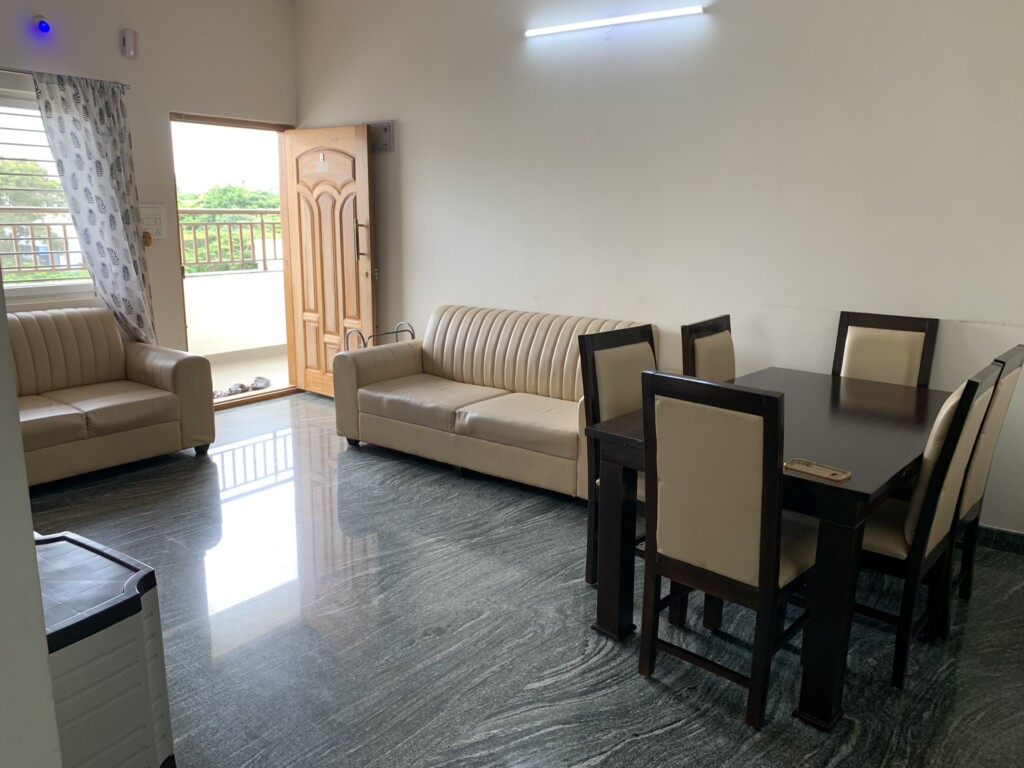
Photographs help a family picture daily life in a temporary home, but they do not answer every operational question. They may show a representative apartment rather than the exact unit allocated for the requested dates.
The person staying in an apartment is not always the person paying for it. A relative elsewhere may organise the budget while another family member handles arrival.
Hospital-related travel can change, but accommodation policies do not automatically change with it. A family should understand the difference between requesting an amendment and receiving approval for it.
An accessibility preference should become a series of concrete questions before a booking is made. The route from a vehicle to the apartment may include steps even when the building has a lift.
A listing that mentions a kitchen may still leave important questions unanswered. Families may need a refrigerator, a way to prepare ordinary meals and sufficient utensils for the actual resident count.
A larger family may consider two apartments instead of one crowded unit. That can provide privacy, but it also introduces questions about distance between homes, different handovers and separate booking conditions.
A map search becomes useful when the destination is precise. A hospital group name may refer to several campuses, and an appointment may require a particular building.
A room and a whole apartment solve different accommodation problems. A room may suit one visitor with a simple routine, while an apartment can be worth considering when companions need separate sleeping and household space.